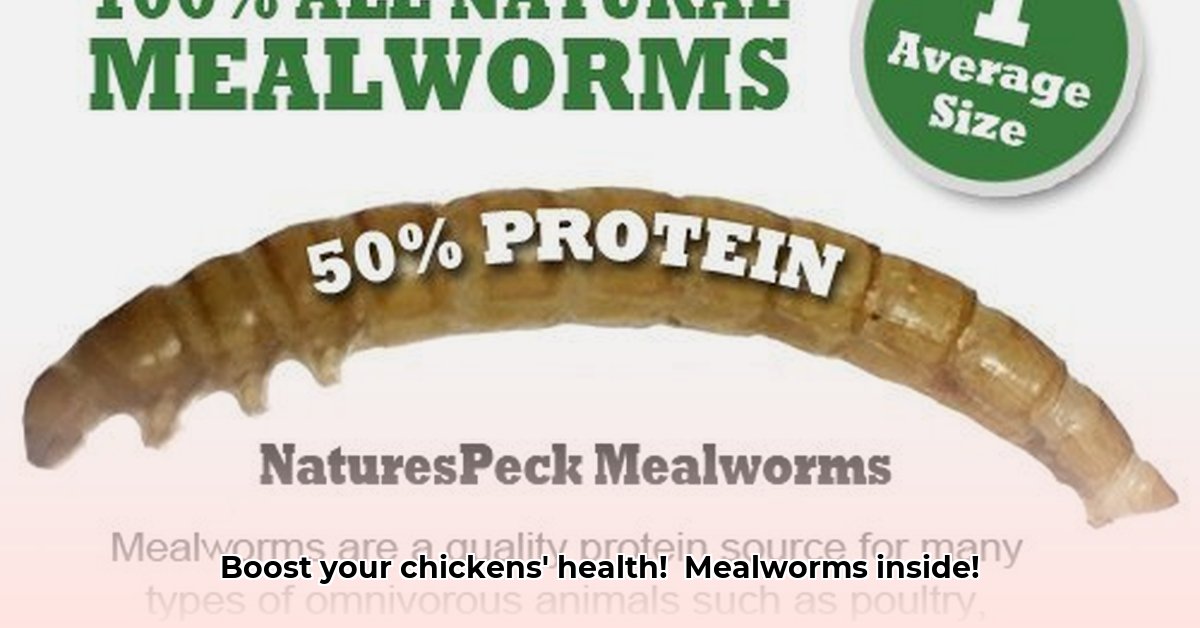
Mealworms for Chickens from Tractor Supply: Boosting Your Flock's Health and Sustainability
Thinking about enhancing your chickens' nutrition and embracing sustainable farming practices? Consider adding mealworms to their diet. Tractor Supply offers convenient access to these protein-packed insects, providing a simple yet impactful way to improve your flock's well-being. Learn more about Tractor Supply's poultry offerings at Tractor Supply Poultry.
Why Mealworms are a Superior Choice for Chickens
Chickens are naturally curious and appreciative of tasty treats, and mealworms certainly fit the bill. But these aren't merely snacks; they're nutritional powerhouses. They're rich in protein, essential for strong muscles and robust egg production. Beyond protein, they provide essential amino acids (the building blocks of protein) and healthy fats, boosting energy levels and promoting vibrant feather health. Even the chitin (a component of their exoskeletons) aids digestion. This nutritional richness translates to happier, healthier chickens, resulting in more and higher-quality eggs. Don't your chickens deserve the best?
Furthermore, mealworms offer a natural and sustainable alternative to some components of commercial chicken feed, benefiting both your chickens and the environment.
Tractor Supply: Your Convenient Source for Mealworms
Obtaining high-quality mealworms is effortless with Tractor Supply. They offer various sizes, catering to flocks of all sizes – from a small backyard coop to a larger operation. This convenience allows you to acquire mealworms alongside your other poultry supplies, making it a one-stop shop for all your chicken-keeping needs.
Integrating Mealworms into Your Chickens' Diet: A Step-by-Step Guide
Introducing mealworms requires a gradual approach to avoid digestive upset.
- Start Small: Begin by offering a small handful of mealworms per chicken, two to three times a week. View them as a supplemental treat, not a complete meal replacement.
- Observe Your Flock: Closely monitor your chickens' response to the new feed. Are they enthusiastically consuming them? Do you notice improved energy levels and overall health?
- Adjust Accordingly: Based on your observations, gradually increase or decrease the mealworm quantity. Remember, moderation is key! Overfeeding can lead to digestive issues. Mealworms are an excellent addition to a balanced diet, not a substitute for it.
The Nutritional Powerhouse: Unveiling the Benefits of Mealworms
Mealworms' exceptional nutritional profile is a key factor in their effectiveness as a chicken feed supplement.
| Nutrient | Key Benefit |
|---|---|
| High Protein Content | Supports muscle growth and boosts egg production |
| Essential Amino Acids | Crucial for overall health and development |
| Healthy Fats | Provides energy and promotes healthy feathers |
| Chitin | Aids in digestion and improves gut health |
These nutritional advantages contribute to improved overall chicken wellness and potentially lead to a greater number of higher-quality eggs.
Addressing Potential Concerns Regarding Mealworms
Some may hesitate due to the cost. While mealworms might be slightly pricier than certain traditional feed ingredients, the enhanced egg production and improved chicken health often offset the cost difference. Remember, mealworms are a supplement, not a complete replacement for regular feed.
Sustainability is another consideration. However, insect farming generally has a smaller environmental impact than traditional animal agriculture. Choosing a reputable supplier like Tractor Supply helps mitigate concerns by ensuring responsible sourcing practices.
Ultimately, incorporating mealworms is a personal choice. But considering their nutritional value, accessibility, and positive impact on your flock, they are a worthwhile option. They offer a delicious, straightforward, and sustainable approach to nurturing your chickens.
Comparing Mealworms and Soy-Based Feeds: A Sustainability Perspective
Mealworms present a compelling alternative to soy-based chicken feed, offering significant environmental advantages.
Key Takeaways:
- Mealworms have a higher protein content and richer amino acid profile compared to soybeans.
- Mealworm farming generally requires less land and water and produces fewer greenhouse gas emissions than soy cultivation.
- Scaling mealworm production to satisfy large-scale feed demands remains a challenge.
- Consumer acceptance and clear regulations are crucial for wider mealworm adoption.
- Utilizing organic waste for mealworm breeding offers a significant advantage in waste reduction.
This comparison highlights mealworms as a more sustainable and nutritionally superior alternative for your chickens' feed. Choosing mealworms contributes to a healthier flock and a more sustainable agricultural practice. Don't you want to make a positive impact on both your chickens and the planet?